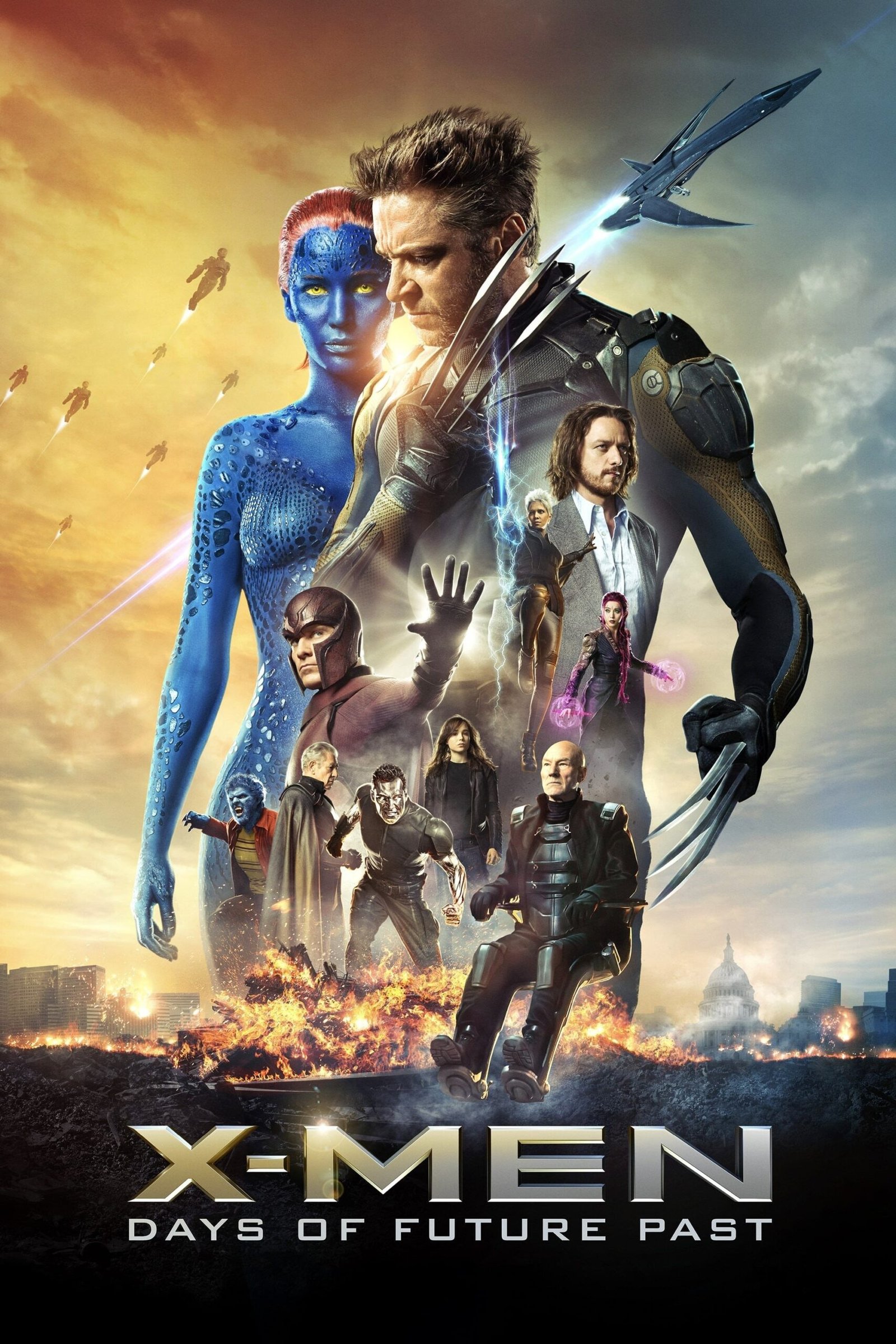
X-Men: Days of Future Past finally puts the most famous X-Men comic story on screen, and here I go through why I think adapting it rather than copying it was the right call, the two casts sharing one film, McAvoy’s wrecked 1973 Charles, Jackman as the calm one, the Quicksilver kitchen scene and the Sentinels.
I’d put it at 3.5 or 4 out of 5. It’s lots of fun, the two-cast idea justifies itself, and I’m still in two minds about an ending that reaches back and undoes earlier films, even if the way it gets there is properly built.
Days of Future Past is one of the most iconic stories in X-Men comics, and I’ve spent years assuming nobody would ever try it on screen properly. The Sentinels, the ruined future, the idea that the whole mutant project ends in camps and graves, that’s the storyline the entire X-universe is built around, and it’s the one every fan has wanted to see since the first film came out. So X-Men: Days of Future Past had a lot to live up to before I’d even sat down. They tried it, and it’s good. I enjoyed this one a great deal, more than I’ve enjoyed an X-Men film in a long while.
Let me be clear about what it isn’t, though. It’s not a word-for-word translation of the comic, and anyone going in expecting the panels rendered in order is going to spend the runtime disappointed. What it is instead is an adaptation of the possibilities in that story. It takes the core engine, a consciousness sent back to stop the one event that dooms every mutant, which is the same change-one-moment-and-everything-shifts idea I watched Doctor Who play with in Father’s Day, and rebuilds around it with the pieces the films actually have. Kitty Pryde’s role in the comic gets handed to Logan, with Kitty doing the sending instead. The past it goes back to moves from the comic’s 1980 to 1973. And Mystique becomes the hinge of the whole thing rather than a supporting player.
Purists will grumble about all of that, and I understand why, because I grew up with the comic too. But I’d rather have a film that understands why the story works than one that copies its surface and misses the point, and this one understands it. The heart of the original was never really who went back or which year they landed in, it was the idea that one act of hate could set off a future nobody survives, and that one act of mercy might stop it. The film keeps that and lets everything else bend around it.
Two casts and a wrecked Charles
The thing I was most sceptical about is the thing I ended up enjoying most. Having James McAvoy and Patrick Stewart in the same film is genuinely cool, and the same goes for Michael Fassbender and Ian McKellen. On paper that’s a gimmick, the kind of stunt casting that exists for a trailer, and it isn’t played that way at all. Seeing the older and younger versions of Xavier and Magneto on screen together does something the films haven’t managed before, it makes the whole run feel like one story about two men rather than a set of sequels. A cast this size is exactly what sank The Amazing Spider-Man 2 last month, and this one somehow keeps every plate spinning.

The scene where the two Charleses meet is the best thing in the film. One of them has already lived through everything the other is currently refusing to face, and neither actor overplays it, which must have been tempting with that much history in the room. And the 1973 Charles is a wreck, which is a brave thing for the film to open with. He’s walking, which means he’s taking a serum that suppresses his telepathy, which means he’s chosen to be able to move at the cost of being able to hear anyone.
That’s a properly good piece of character writing. The man whose entire identity is built on connecting to other people has medicated the connection away because the noise was unbearable after the war took his students, and the school is empty, and Hank is the only one left looking after him. McAvoy plays the whole first act as a man who has decided that hope was a mistake he made once, and the recovery is earned rather than switched on, so by the time he’s ready to use his powers again you believe he’s paid for it.
Jackman and the Quicksilver sequence
Logan is someone you just can’t beat, and Jackman has been doing this for fourteen years now and he’s still the most reliable thing in any X-Men film. His first job in 1973 isn’t stopping the Sentinels, it’s rebuilding Charles enough to be useful. Here he’s the messenger rather than the fighter, which is a real change of function for the character, and he handles it without the film needing to compensate with extra action. He’s the calmest person in 1973 because he’s the only one who knows how it ends, and I liked that inversion a lot, the berserker as the patient one while everyone around him loses their composure.
Then there’s the Pentagon breakout, which everyone is going to be talking about. Evan Peters gets maybe fifteen minutes of screen time and walks off with the whole picture, and I’m clearly not the only one who thought so. The kitchen sequence, where he moves through the room at his own speed rearranging a fight while everyone else is effectively frozen, is exactly the kind of thing these films should have been doing all along, taking a power, thinking properly about what it would actually be like, and then building a set piece around the answer rather than around a punch-up.
It’s funny, it’s inventive, and it makes the character feel genuinely superhuman in a way that a hundred CGI slugfests haven’t. The music, the drops of water hanging in the air, him strolling round the room tweaking the guards’ punches, all of it is there because somebody sat down and asked what super-speed would actually feel like from the inside. Quite well done, and I’d happily watch a lot more of him, which is probably the best thing you can say about a character who only turns up for one stretch of the film.
The Sentinels are the right villain
The future sections are grim, and they should be. The Sentinels here are adaptive robots that copy any power they encounter, which means every mutant advantage becomes a liability the moment it’s used, and that’s a smart threat because it can’t be beaten by being stronger. The survivors aren’t really fighting any more, they’re using Kitty to loop time and stay alive a few more days at a stretch, and the film shows just enough of that to make the stakes land without wallowing in it. Bishop, Blink, Sunspot and the rest get maybe a handful of lines between them, but the way they work together against something that keeps learning sells it.
Turning Mystique’s DNA into the basis for that adaptability is a good piece of plotting too. The thing that dooms the mutants is a mutant, and the assassination she thinks will protect them, killing Trask in Paris, is what causes it, because her capture hands over the very thing the programme needs. It also gives Jennifer Lawrence more to do than any version of the character has had before, and it means the whole future rests on what one person decides to do with her anger, which is very close to what the comic was about in the first place.
The ending fixes some things
Logan wakes up in a 2023 that has been rewritten. The mansion’s standing, Jean and Scott are alive, Xavier is at his desk. I’ll be honest that I have mixed feelings about a film reaching back and undoing previous films, and I suspect I’ll be arguing with myself about it for a while. What I’ll say for it is that the mechanism is properly built. The change happens because Mystique makes a choice on live television with the world watching, and Charles talks her into it rather than overpowering her. The world sees a mutant choose mercy, and that’s a resolution the film earned rather than a switch it flipped. Whether it’s a relief or a cheat probably depends on how much the last few years of this franchise annoyed you.
Lots of fun. Good job. I’d put it at 3.5 or 4 out of 5. Every actor in it acquits themselves well, the two-cast structure justifies itself, and it’s the first X-Men film in a while that feels like the people making it had a plan beyond the next set piece. Set next to The Avengers it’s a colder, more serious film, and set next to this spring’s other superhero effort it’s the more ambitious of the two in how it’s put together, if not quite as sharp scene to scene.
The mid-credits sting points at something ancient and Egyptian, and I have absolutely no idea what they’re planning to do with that. After this one I’m willing to find out.
Was the rewritten 2023 a relief for you, or did it feel like a cheat on the films that came before it? Tell me in the comments.

1 comment
The Mystique choice at the end is the comic’s idea in a different coat. In the original it was Kate Pryde stopping the Brotherhood’s assassination, here it’s Raven stopping herself, and I think that’s the stronger version because the one person who can save everyone is the one who was about to doom them. It’s the same lesson Charles has been trying to teach Erik since First Class, it just finally lands on someone who listens.